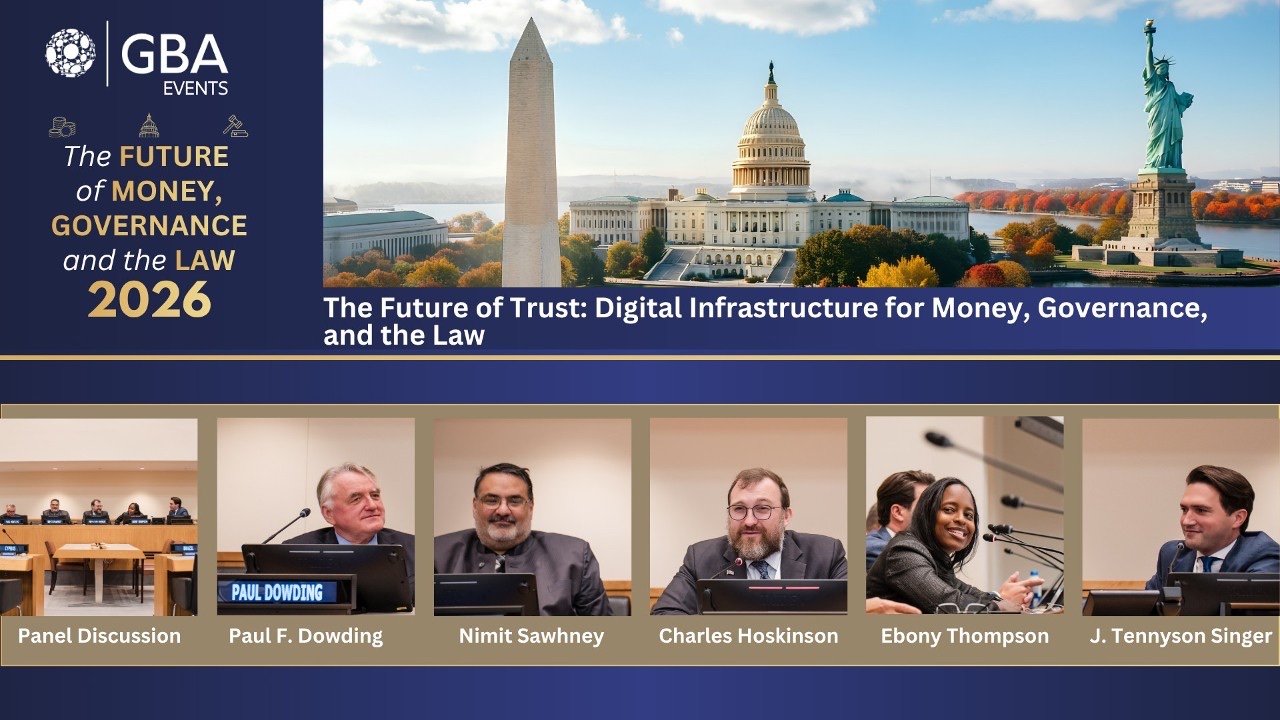
On October 2, 2026, Voatz co-founder and CEO Nimit Sawhney was invited to speak at United Nations Headquarters in New York as part of the Future of Money, Governance & the Law 2026 summit. The New York session was hosted by the Dynamic Coalition on Blockchain Assurance & Standardization, recognized by the UN Internet Governance Forum, and organized by the United Nations Joint Staff Pension Fund and the Government Blockchain Association. Held during the week of the UN General Assembly, the summit brought together UN mission representatives, policymakers, technologists and legal experts to examine how the UN Global Digital Compact is shaping financial systems, governance and legal frameworks.
The Future of Trust
Nimit joined the summit’s opening panel, The Future of Trust: Digital Infrastructure for Money, Governance, and the Law, alongside Paul F. Dowding, Charles Hoskinson, Ebony Thompson and J. Tennyson Singer. The panel’s premise was simple: money, governance and law appear to have little in common, yet all three depend on trust, and the digital infrastructure now being built for each of them will succeed or fail on whether that trust can be earned and verified.
Nimit spoke about why elections are the hardest trust problem in public infrastructure. In most digital systems, the person relying on a result can check it: a bank balance, a shipment, a filed document. An election asks every voter to trust an outcome they cannot personally observe, produced from ballots they must never be able to see, by a process that has to be both secret and verifiable at the same time. Any digital infrastructure for voting has to earn that trust directly from the public, not only from the officials who run it.
He drew on a decade of running pilots and binding elections in the United States, Canada and Mexico, from the first mobile ballots cast by deployed military voters in 2018 to municipal elections across Ontario and a national election in Mexico. The lesson from that experience is that trust is built through things a voter can act on. Voatz gives every voter an anonymized, voter-verifiable receipt that lets them confirm their ballot was recorded as cast, and gives jurisdictions a paper trail and audit data that independent parties can check after the election. Together with independent security audits, a public bug bounty program and certification of the company’s security management system, those are the mechanisms that have let election officials and voters extend trust to a new way of voting one election at a time.
Finally, he made the case that standards matter more than any single technology. Blockchains, biometrics and cryptography each solve a piece of the problem, but what lets a government compare solutions, hold vendors accountable and explain its choices to the public is an open, independently assessed standard. Voatz has supported the Government Blockchain Association’s work on standards for remote accessible ballot delivery, marking and return since 2022, and the GBA’s Blockchain Maturity Model, under which the Voatz platform was the first election system to be rated a Trusted Blockchain Solution, is the kind of yardstick that turns a claim of trustworthiness into something that can be measured.
Why it matters
Voatz has worked with the Government Blockchain Association since its voting working group began drafting standards for remote accessible ballot delivery, marking and return in 2022, and in 2023 the Voatz platform became the first election system rated a Trusted Blockchain Solution under the GBA’s Blockchain Maturity Model. Being asked to open a UN summit on trust in digital infrastructure continues that work on a larger stage, at a moment when governments around the world are deciding how much of their civic infrastructure can responsibly move online.
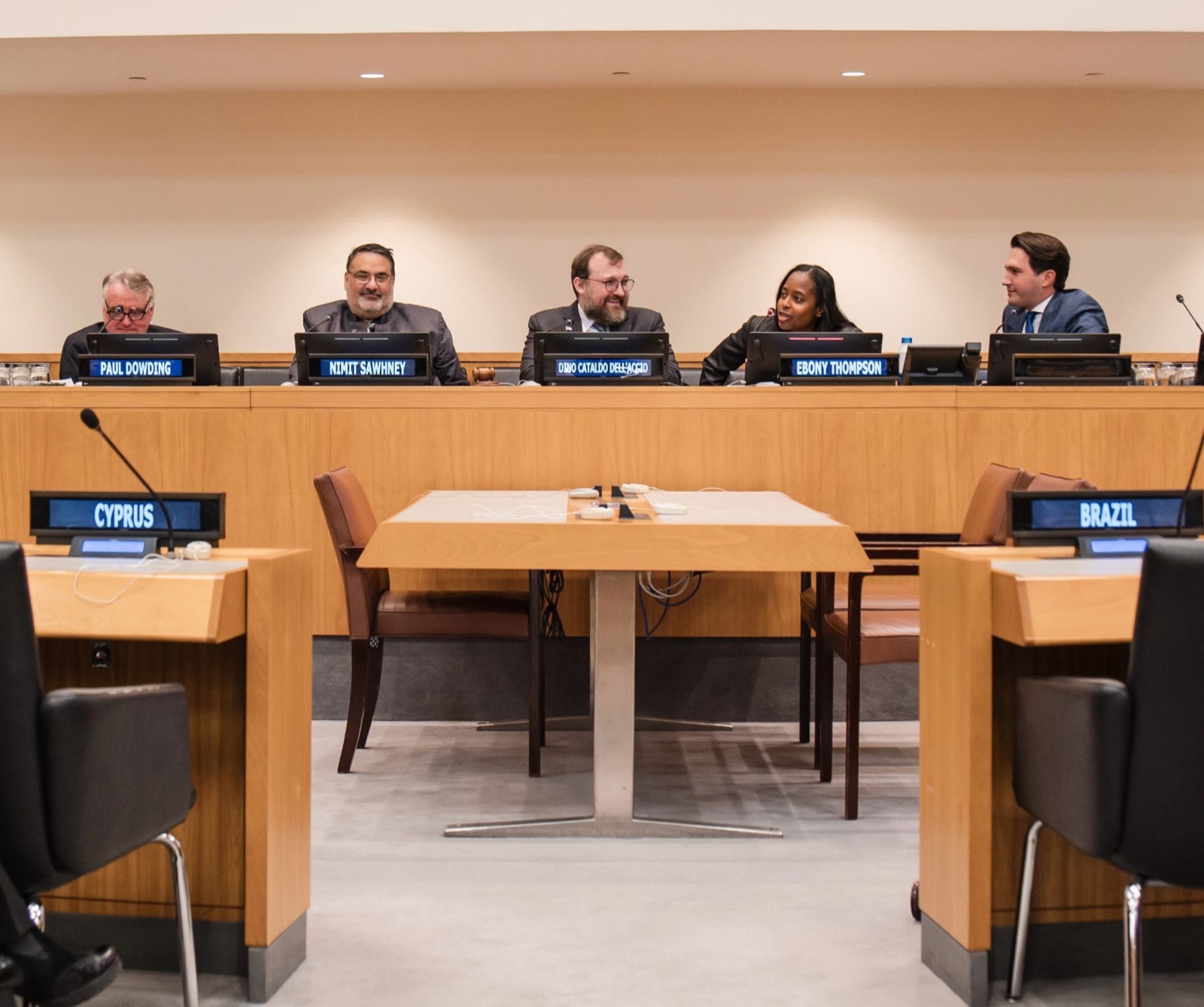
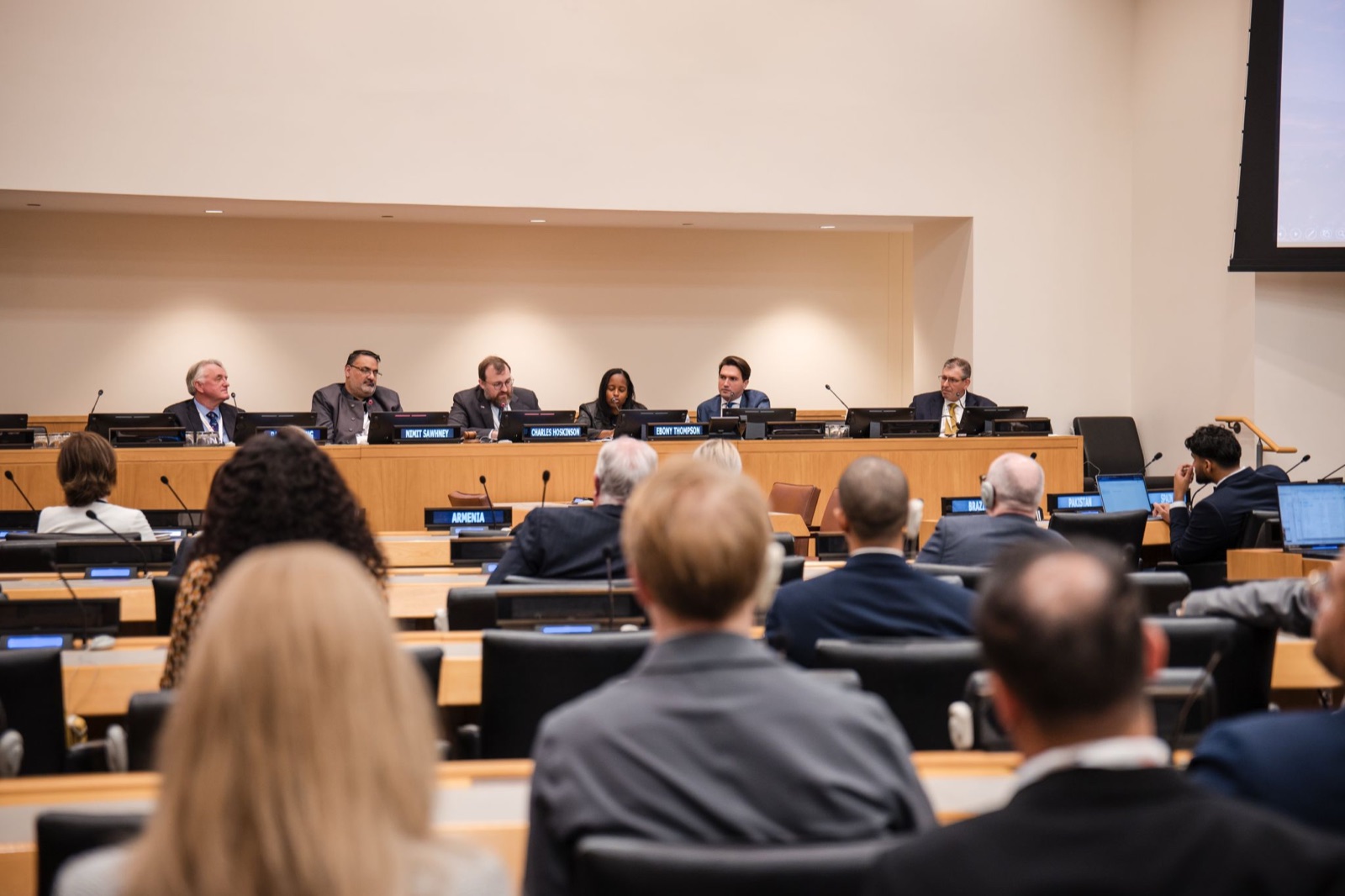
We thank the Government Blockchain Association, the Dynamic Coalition on Blockchain Assurance & Standardization and the United Nations Joint Staff Pension Fund for the invitation, and our fellow panelists for the discussion.


